
Guide
PO invoice mismatch: identify the price, item or reference that needs a decision
Separate a genuine price discrepancy from a wrong order reference or stale revision before asking finance to approve the invoice.
Published
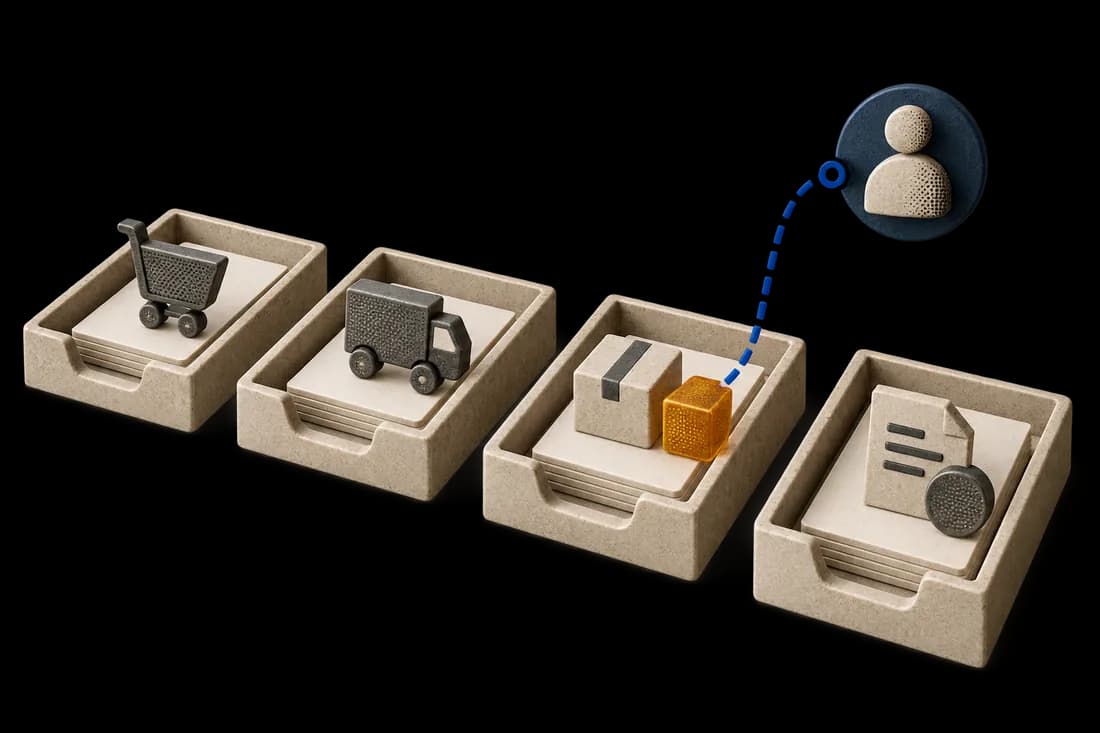
A PO invoice mismatch means something on the supplier invoice disagrees with the purchase order used for comparison. The next action depends on the cause: a changed price, an unauthorized item, an incorrect reference or an approved revision that has not reached finance.
For purchasing managers, the goal is a precise exception the responsible person can settle. “Invoice does not match” is a starting point. “Line 3 bills MAD 108 against the approved MAD 100 price” is an actionable question.
Establish the right purchase order first
Check supplier identity, purchase-order reference and the version that was approved. A PDF found in an email thread may predate a change recorded in your ERP.
Then confirm the line, currency, unit and commercial basis. Compare a net unit price with a net unit price. Freight, discounts and taxes may appear as separate lines or allocations and require their own agreed checks. A similar total can conceal different line values.
If the order reference is missing, the pilot should route the case for identification. Inferring a convenient order from the amount alone risks attaching the invoice to the wrong purchase.
Worked example: MAD 240 to explain
Illustrative data: an approved PO orders 30 valves at MAD 100 each, before tax. The invoice bills 30 at MAD 108. The total price difference is 30 × MAD 8 = MAD 240, or 8% per unit.
Suppose your agreed price tolerance is 2%. This case is outside it and needs review. If purchasing authorized MAD 108 in a later order revision, obtain that evidence and compare again. Otherwise ask for the appropriate supplier correction.
The MAD 240 is the amount in question, not a saving already achieved. Receipt matching is another check: thirty units billed also need the receiving evidence required by your policy.
The OCRAgent mechanism
OCRAgent's invoice reconciliation code compares extracted prices with purchase-order prices and produces a price-variance finding when the configured tolerance is exceeded. It also flags an invoice item that cannot be matched to an order line.
This is a deterministic comparison after extraction. Reliable inputs matter: the current reference data, correct line match and interpretable numeric values. The pilot must test ambiguous descriptions and incomplete fields rather than accepting a plausible match.
Kaliits configures the document-to-reference handoff and review route around that core. Approved SKU mappings, contract amendments and ERP updates require a defined implementation. The code's default tolerance is not your agreed policy.
Give purchasing a question it can answer
A useful exception packet states the supplier and invoice, approved order version, compared line, values, difference and source locations. It identifies the decision owner and records whether the response requires a corrected invoice, order amendment or documented exception.
Avoid changing the order merely to make the invoice pass. A system can display a revised reference, but the responsible person must establish that the revision was authorized.
A clean price comparison also does not prove goods were received. See the three-document matching workflow when quantity evidence is part of the hold.
Where real project experience helps
Smatch's reported result concerns every lead in its workflow receiving a response. The relevant operational lesson is to give each open item a visible next action. It is not evidence that Smatch used invoice matching.
Kaliits worked on a real Autohaus Frisch case involving Michelin: 20 items were ordered, with one damaged or missing. This is a real case background, confirmed by Mehdi Kourchal on 4 October 2026, rather than an invented purchasing scenario. This quantity exception is separate from the illustrative price example above. Read the purchasing evidence and walkthrough.
Measure the review, not just the amount flagged
Count hands-on minutes finding the approved order, comparing lines and preparing the supplier query. Record unresolved cases, false alerts and elapsed time to an authorized decision.
Illustrative example: forty price exceptions per month reduced from fifteen to six hands-on minutes release six hours. Any financial recovery belongs in a separate record supported by the final correction. Do not add the invoice's entire value to ROI because one line was questioned.
Start with the mismatch that repeats
A pilot can begin with one supplier family and one recurring price or reference problem. Test stale order versions, unknown items, unit conversions and tolerance boundaries before connecting an operational approval route.
Map our PO invoice mismatch. Describe the disputed field, where the approved order lives, your destination software and who may authorize a correction. Kaliits can then assess whether your native ERP rules are sufficient or an additional evidence-and-review workflow is justified.
Related reading
Three-way matching: compare the invoice with the order and the actual receipt
A matching invoice total can hide a delivery shortfall. Compare the transaction and its lines, then give finance the evidence needed for a decision.
Read articleGoods receipt discrepancy: keep delivered, received and accepted quantities separate
A signed delivery note, a warehouse count and an inspection result can state different quantities. Preserve each fact before deciding what may be billed.
Read articleInvoice approval bottleneck: give the approver evidence and a clear next decision
An invoice can be extracted quickly and still wait days. Identify the missing evidence, decision owner and stop condition before adding reminders.
Read article