
Guide
Goods receipt discrepancy: keep delivered, received and accepted quantities separate
A signed delivery note, a warehouse count and an inspection result can state different quantities. Preserve each fact before deciding what may be billed.
Published
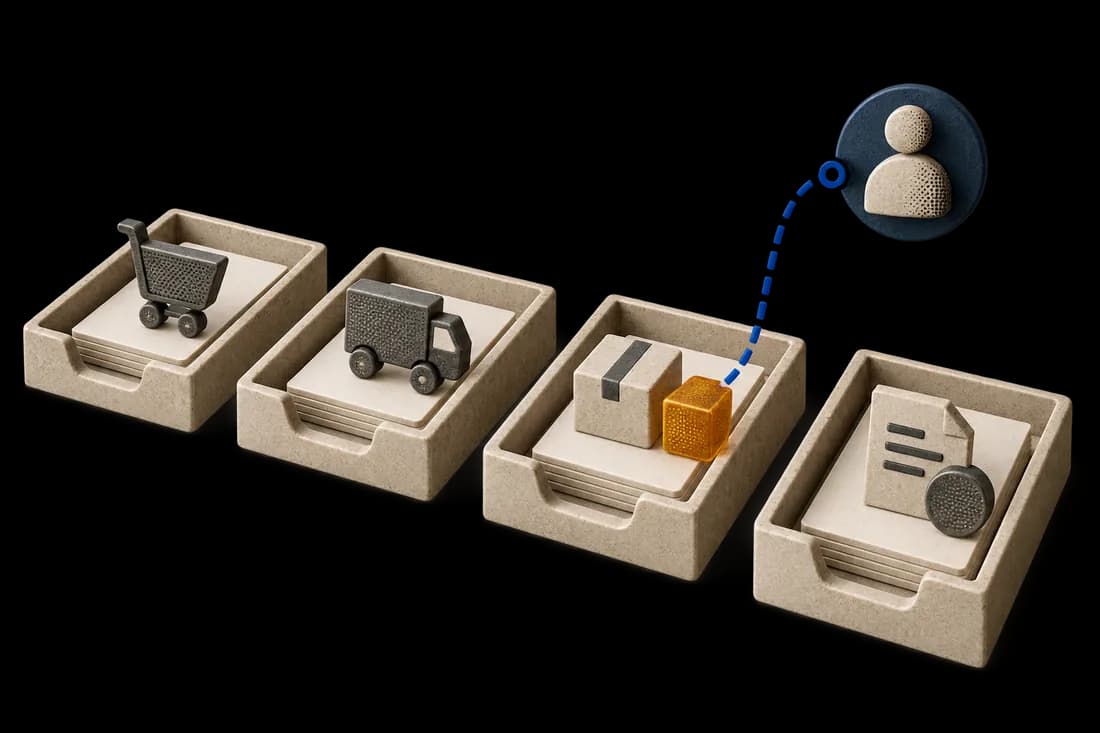
A goods receipt discrepancy is a difference between the purchase expectation, shipment evidence or receiving record. It may be a short delivery, damaged goods, an incorrect unit or a receiving entry that has not been updated.
A warehouse or finance team needs to establish what happened before treating the difference as a supplier error. OCR can read a document. It cannot count the goods at the dock or decide which damaged items your team accepts.
Record the physical facts without merging them
Keep ordered, delivered, received, accepted and invoiced quantities as separate values wherever the process requires them. Record the receipt date, line, unit, source and responsible person.
A delivery note may describe what the supplier dispatched. Your receipt records what receiving confirmed. An inspection record explains what was rejected. A later delivery should have its own receipt rather than overwrite the first.
This separation lets purchasing determine whether to request missing goods, a replacement, a credit or a correction to an internal record.
The real Autohaus Frisch/Michelin case: one exception out of 20 ordered
Kaliits worked on a real Autohaus Frisch case involving Michelin: 20 items were ordered, with one damaged or missing. This is a real case background, confirmed by Mehdi Kourchal on 4 October 2026, rather than an invented purchasing scenario.
That one item makes the distinction between arrival and acceptance operationally important. If it is missing, receiving must confirm the shortage. If it is damaged, the receiving and acceptance records must show its condition and the authorized treatment.
The source evidence determines the status. OCRAgent cannot count the goods or decide what your team accepts. The invoice then needs to be compared with the correct recorded quantity under your policy.
No original price, exact billed quantity, final resolution or measured saving has been provided for this case. The article therefore does not attach an invented invoice value or recovery amount to it.
What OCRAgent can support
With correct invoice lines and goods-receipt records, OCRAgent's invoice reconciliation function can identify billed quantities above recorded received quantities. It produces the compared values and the shortfall.
The goods-receipt value must come from an authorized reference or a reviewed extraction. Reading “100” on the delivery note does not establish that the warehouse received 100.
Kaliits can scope additional acceptance evidence and receipt allocation for a pilot. These controls need explicit tests; the legacy invoice comparison alone does not establish inspection handling, return accounting or cumulative partial-receipt balances.
Resolve the source question before changing the invoice
If the receiving entry is stale, the warehouse should correct it under its existing authority with supporting evidence. If the shortage is confirmed, purchasing can agree the supplier action. Finance retains the release decision.
A useful exception contains the source records, line and unit, quantity difference, physical-check status and next owner. Photos or notes can support the human investigation, but a photo attachment is not itself an approved receipt.
Uncertain scans, missing receipt lines and failed processing should remain distinguishable. An unreadable document is not proof of a delivery shortage.
Relevant experience, with its actual scope
At SLS, Mehdi Kourchal reports 80% less manual-entry time in a warehouse flow using inbox, WhatsApp and digital documents with human exception review. That experience is closer to receiving-data intake than Wawa's WooCommerce work.
The SLS account does not measure goods-receipt reconciliation. The real Autohaus Frisch/Michelin case above provides the purchasing background; the SLS evidence supports intake experience. The interactive demonstration uses separate display values to explain the control.
Measure the searches and repeated handoffs
Track minutes locating the receipt, confirming physical facts, correcting records and preparing the purchasing handoff. Record time waiting for confirmation separately.
Illustrative calculation: twenty-five monthly cases taking eighteen rather than eight hands-on minutes represent 4.2 hours of potential capacity released. Do not claim the value of all disputed goods as avoided expenditure; financial benefit requires the actual supplier or accounting outcome.
Test the awkward cases before expanding
Start with one receiving flow. Include split deliveries, damaged units, missing receipts, returns and carton-to-unit conversions. Agree who updates the receiving record and who approves the invoice.
Review purchasing mismatch control. For background, see what happens when a supplier invoices above accepted quantity.
Describe our goods receipt discrepancy. State the ordered, received, accepted and billed quantities you currently record, where they live and which team is waiting for a decision.
Related reading
Three-way matching: compare the invoice with the order and the actual receipt
A matching invoice total can hide a delivery shortfall. Compare the transaction and its lines, then give finance the evidence needed for a decision.
Read article
What happens when a supplier invoices more than the quantity accepted?
A receiving example that separates ordered, delivered, accepted and invoiced quantities before payment approval.
Read articleHow should partial delivery change PO, receipt and invoice matching?
Track each receipt and the open order balance while keeping invoice exceptions visible for human approval.
Read article