
Guide
Three-way matching: compare the invoice with the order and the actual receipt
A matching invoice total can hide a delivery shortfall. Compare the transaction and its lines, then give finance the evidence needed for a decision.
Published
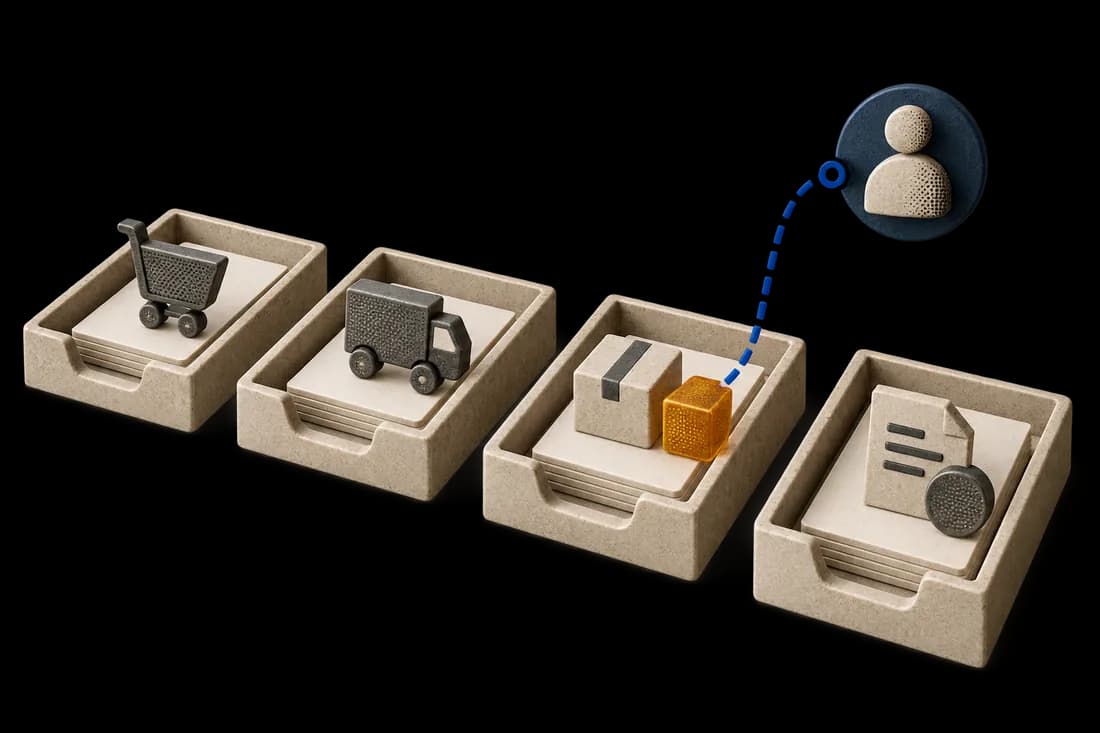
Three-way matching checks whether a supplier invoice agrees with the purchase order and the goods receipt. It helps a purchasing or finance team see when the billed goods differ from the agreed purchase or recorded delivery.
The first question is which evidence your business requires. A delivery note describes a shipment. A warehouse receipt records receiving. If inspection distinguishes received goods from accepted goods, keep that additional quantity visible.
Oracle's matching definitions distinguish three-way matching using the receipt from four-way matching that also uses inspection acceptance. The distinction matters when damaged goods arrive.
A real purchasing case: 20 ordered at Autohaus Frisch, one damaged or missing
Kaliits worked on a real Autohaus Frisch case involving Michelin: 20 items were ordered, with one damaged or missing. This is a real case background, confirmed by Mehdi Kourchal on 4 October 2026, rather than an invented purchasing scenario.
The case explains why the order quantity alone is not enough. The team needs the receiving evidence and the invoice to understand what the one-item exception means for the decision.
A missing item affects what arrived. A damaged item may have arrived but require a separate acceptance decision. Those are different states, and the receipt or inspection record must establish which applies. Do not silently replace the actual record with a presumed quantity.
The case's price, billed quantity and final correction have not been supplied here. The useful proof is the real operational problem Kaliits worked on, rather than a claimed amount saved or automatic approval outcome.
How OCRAgent makes the invoice difference reviewable
OCRAgent has an invoice reconciliation function that compares extracted invoice lines against purchase-order and goods-receipt data. It produces findings for unmatched items, price differences beyond a configured tolerance and billed quantities above the recorded receipt.
The arithmetic is explicit. A reviewer can see the compared values and the reason for a finding. OCRAgent's dossier processing also preserves page evidence for extracted facts and supports recorded human review.
Kaliits must connect your reference records, agree the line mappings and define what may proceed. A technical matching result is not your finance approval policy. The reviewed legacy invoice flow must be assessed and secured before operational deployment.
Four controls that belong in the pilot
Match the transaction before its lines. Check the supplier, order reference and order revision. Similar product descriptions are candidate matches, especially when two catalogue items have similar names.
Check the units. Two cartons equal twelve units only when an approved six-unit pack size exists. Preserve the original unit and conversion evidence.
Agree the tolerances. OCRAgent's invoice function has a configurable price tolerance; its code default is not a recommendation for your business. Test above, below and exactly at your chosen boundary.
Test cumulative balances. Partial receipts, previous invoices and later credits change what remains open. Their allocation needs explicit validation; a comparison against one receipt cannot establish the full purchase balance.
Show the exception to the person who can resolve it
A receiving discrepancy goes to the warehouse owner. An agreed-price question goes to purchasing. Finance decides whether the documented outcome satisfies its approval controls.
The useful output is a review packet: sources, compared line, difference, reason and decision needed. A buyer can request a correction, replacement or credit without reconstructing the comparison from separate inboxes.
The Autohaus Frisch/Michelin example above is a real case Kaliits worked on. The interactive purchasing demonstration uses separate display values to explain comparison rules. Those display values should not be mistaken for the original client records. Smatch's follow-up outcome and Wawa's WooCommerce time reduction concern other workflows.
Measure review effort before claiming ROI
For this workflow, record minutes spent locating the documents, checking the line and resolving the exception. Track incorrect matches and missed known differences alongside handling time.
An illustrative 60 monthly exceptions reduced from 12 to five hands-on minutes would release seven hours. Waiting for a supplier response remains a separate elapsed-time measure. Potential disputed value is not recovered cash; count a financial benefit only after a confirmed correction and avoid counting it twice.
Move from comparison to a controlled implementation
Review purchasing mismatch control, then inspect the demonstration. A practical pilot starts with a narrow document family, agreed mappings, known exceptions and a named reviewer.
Test our order, receipt and invoice comparison. Describe one recurring difference, your ERP and who resolves it. The next discussion can map the evidence and determine whether existing ERP matching or a bounded Kaliits pilot is the better fit.
Related reading
What happens when a supplier invoices more than the quantity accepted?
A receiving example that separates ordered, delivered, accepted and invoiced quantities before payment approval.
Read articleHow should partial delivery change PO, receipt and invoice matching?
Track each receipt and the open order balance while keeping invoice exceptions visible for human approval.
Read articleHow to match documents: references, line items and exceptions
Learn to match orders, receipts and invoices using source evidence, normalized fields and explicit rules, including partial deliveries and accepted quantities.
Read article