
Guide
Invoice approval bottleneck: give the approver evidence and a clear next decision
An invoice can be extracted quickly and still wait days. Identify the missing evidence, decision owner and stop condition before adding reminders.
Published
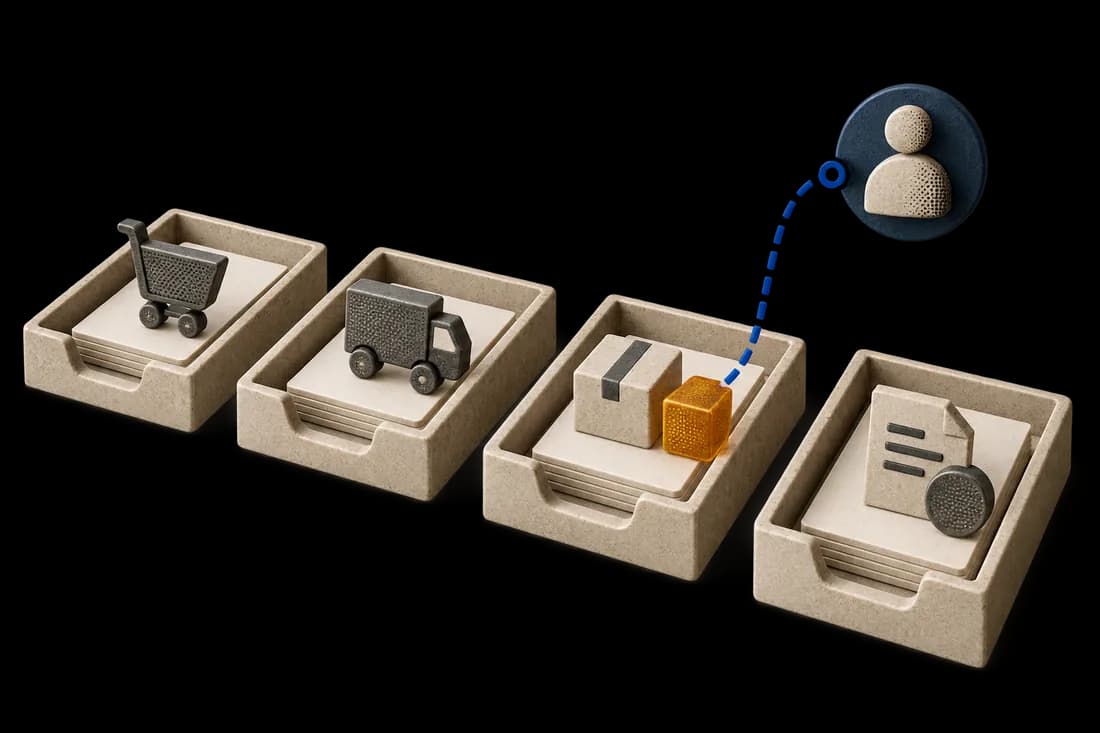
An invoice approval bottleneck occurs when an invoice cannot reach an authorized decision. The blockage may be missing receiving evidence, a price disagreement, unclear ownership or an approver who has not acted.
Finance managers should separate those causes before adding automation. A reminder helps when a known approver has a complete case. It does little when nobody knows whether the invoice is correct.
Map the blocked decision, not just the overdue invoice
For one recent case, ask what decision was needed, which evidence was missing, who could supply it and who could approve the outcome.
Use precise operational states: evidence incomplete, discrepancy awaiting resolution, ready for finance review and approved under the existing policy. Record the reason for a hold. Avoid a single “pending” label that mixes unrelated work.
An approval queue also needs a substitution rule when a responsible person is absent, plus a clear escalation owner. These are team policies that the implementation must reflect.
A real exception before approval: Autohaus Frisch and Michelin
Kaliits worked on a real Autohaus Frisch case involving Michelin: 20 items were ordered, with one damaged or missing. This is a real case background, confirmed by Mehdi Kourchal on 4 October 2026, rather than an invented purchasing scenario.
A document-control workflow must make that exception understandable to the person deciding what happens next. Receiving confirms whether the item is missing or damaged. Purchasing handles the relevant supplier discussion, and finance follows its approval policy.
The case background does not supply an actual approval waiting time or final decision. It shows why an approval handoff needs the source evidence and a named owner, rather than another generic reminder. The time calculations below remain illustrative.
Where OCRAgent helps
OCRAgent can turn extracted document differences into explicit findings. Its dossier workflow records review decisions, source evidence and reasons, and checks the decision version when a reviewer acts.
Those controls help people inspect the case that is actually being decided. They do not establish your organization's approval matrix, delegation rules or email escalation sequence.
Kaliits scopes the surrounding workflow: who owns each exception, what status makes it reviewable, which communication channel is supported and what stops a reminder. ERP approval authority remains with your configured controls.
A lesson from Smatch, with the right scope
Mehdi Kourchal's published Smatch account describes a lead-follow-up workflow where every lead in the flow received a response. It supports the value of reliable intake and an owned next action.
It does not establish an invoice approval deployment or a reduction in days payable. The transferable design question is useful: which open item has no next action, and how does the team know? Read the Smatch project scope.
The Autohaus Frisch/Michelin example above is a real case, while the interactive purchasing walkthrough uses separate display values to explain the review pattern. No measured approval-time result is assigned to the real case.
A reminder needs a tested stop condition
Define reminders only after the case state is reliable. Approval, rejection, correction, reassignment and an incoming response may each require the sequence to stop or change.
Start with prepared drafts or internal notifications if response detection is unreliable. A dispatched message, a delivered message and a human answer are distinct outcomes. The integration must record the state it can actually verify.
Test two people acting close together. A decision about an older version should not silently approve a newly changed case. Include absence, escalation and failed notification in the pilot.
Measure handling time and waiting time separately
Track minutes building the review packet and handling each follow-up. Track elapsed time waiting for missing evidence separately from elapsed time waiting on the approver.
Illustrative calculation: fifty cases per month needing nine rather than four hands-on minutes of preparation release 4.2 hours. A shorter approval delay may matter, but value it only through a confirmed consequence. Do not infer late fees avoided, better supplier terms or extra revenue without records.
Start with one approval lane
Choose a document family, decision owner and recurring reason for delay. Map the current evidence, test the review packet, then test routing and stop conditions. Expand only when the team can explain each open case.
Review purchasing mismatch control, then map our invoice approval bottleneck. Describe the last blocked invoice, what evidence was missing and who had authority to move it forward.
Related reading
Three-way matching: compare the invoice with the order and the actual receipt
A matching invoice total can hide a delivery shortfall. Compare the transaction and its lines, then give finance the evidence needed for a decision.
Read articlePO invoice mismatch: identify the price, item or reference that needs a decision
Separate a genuine price discrepancy from a wrong order reference or stale revision before asking finance to approve the invoice.
Read articleGoods receipt discrepancy: keep delivered, received and accepted quantities separate
A signed delivery note, a warehouse count and an inspection result can state different quantities. Preserve each fact before deciding what may be billed.
Read article