
Insight
Kaliits: less paperwork, operations that move forward
Published
AT A GLANCE
Kaliits is building toward a clear ambition: become Morocco's leading document-intelligence solution and help logistics and finance teams spend less time moving paperwork.
THE PROCESS AT A GLANCE
From document to decision
A simple review pattern to adapt to each workflow.
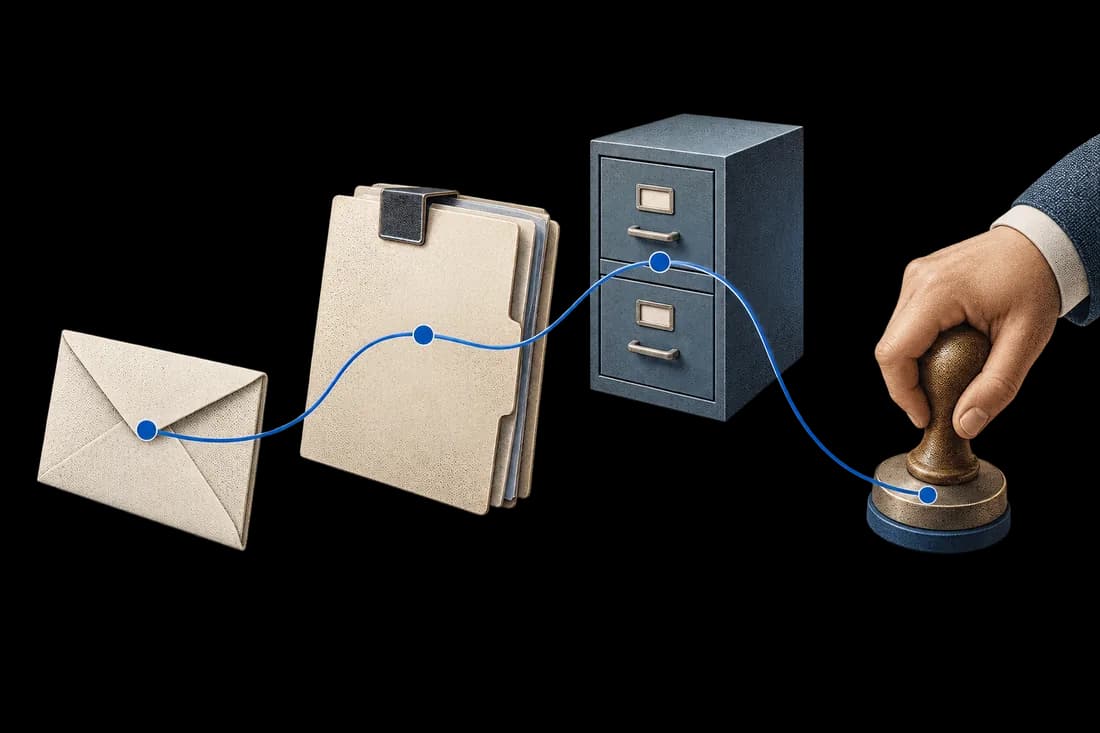
- SourceIdentify the document and source of truth.
- ExceptionShow what is missing or does not match.
- DecisionRoute the exception to the responsible person.
An invoice arrives in an inbox. A delivery note sits in another folder. The order is already in the ERP. Someone opens every file, checks the references, copies the information and asks for the missing piece. The business is ready to move, but the paperwork still needs to catch up.
Kaliits is being built to change that everyday experience. Our ambition is to become Morocco's number-one document-intelligence solution and remove a substantial amount of repetitive paperwork from logistics and finance. That is the direction we are working toward, with each implementation earning its place through the work it actually helps a team complete.
What is Kaliits?
Kaliits is a Morocco-focused commercial practice developing document-intelligence workflows, systems integration and automation. We connect documents, business rules and existing tools around the decisions an operating team needs to make.
The practical goal is straightforward: help information move from a document to the next useful action. That might mean preparing a purchasing discrepancy for review, checking an import dossier, or connecting accepted information to the system where the team works.
The paperwork we want to remove
We want to reduce repeated entry of the same information, manual comparison across files, searching for supporting evidence and chasing the next person in a process. These tasks take attention that teams could use to handle the cases that actually need their expertise.
Scanning a page is only the beginning. The information still needs context: which case does it belong to, which version applies, what must agree, and who can resolve the difference? Document intelligence becomes useful when it answers those questions within a defined workflow.
From an inbox workflow to a bigger idea
The work behind Kaliits began after founder El Mehdi Kourchal left Smatch Digital. OCRAgent started as an n8n workflow that collected documents from inboxes, read them with OCR and compared information between them.
A conversation with Jawad Zoumi of TEDI Services encouraged the idea of turning that work into a product for other companies. Rebuilding the application and adapting to changing requirements then led toward a shared technical core with separate workflow plugins.
That experience shaped Kaliits' direction: reuse the document-processing foundation while giving each business process its own rules, integrations and responsibilities.
Read the founder story on Kourchal
One foundation, different operational problems
Purchasing control asks whether the order, accepted receipt and supplier invoice agree. Import-dossier control asks whether the required evidence is present and whether important references conflict. These are among the first controlled-pilot applications in the current Kaliits offer.
The wider direction includes preparing reviewed information for ERP insertion and email tasks based on document evidence. Each new connection or action needs its own implementation scope, access permissions and tests. The shared core is meant to support adaptation without treating every company as if it had the same process.
OCRAgent, the public repository describing Ironclad OCR, makes part of this engineering inspectable. Kourchal documents the technical choices; Kaliits is the destination for discussing the commercial workflow.
Explore the engineering behind OCRAgent
What that looks like in a real process
Consider a fictional example: 20 units are ordered, 17 are accepted at receipt, and the supplier invoices 20. A document workflow can bring those records together and highlight the difference, with the source information available for review.
The useful next step is a clear decision path. The responsible person checks whether another receipt is missing, a partial delivery remains open or the invoice needs correction. Reading a quantity does not prove what physically arrived; the receiving process supplies that evidence.
Our aim is to make the case easier to investigate and move forward, while the team keeps authority over acceptance and the next operational action.
An ambitious vision with a practical starting point
We want Moroccan logistics and finance teams to spend less of their day carrying information between inboxes, documents and systems. We want document intelligence to become a useful part of their operations, with visible evidence and understandable decisions.
That vision starts with one recurring problem. The current commercial offer is controlled pilot implementation: identify the sources and owner, agree the rules and boundaries, test representative cases, and evaluate the result with the team.
Success should show up in correction effort, time spent resolving exceptions and the quality of the final handoff. A useful native import or an existing ERP feature may already cover part of the need. We investigate that before proposing custom work.
Bring us the paperwork that slows your team down
Start with one document process, the tools involved and the recurring exception you want to resolve. We will discuss the gap, the access required and a bounded next step that your team can evaluate.
The ambition is big. The first step is concrete: make one piece of daily work easier to finish, then build on the evidence.
Related reading
What is IDP? Understanding intelligent document processing
A beginner's guide to document intake, classification, extraction, validation, human review and controlled export, with a fictional invoice workflow.
Read article
How to match documents: references, line items and exceptions
Learn to match orders, receipts and invoices using source evidence, normalized fields and explicit rules, including partial deliveries and accepted quantities.
Read article
Document automation pilots: measure the work actually saved
Compare extraction, review, waiting and import against a defined baseline. A practical method for deciding whether a document-automation pilot should expand.
Read article