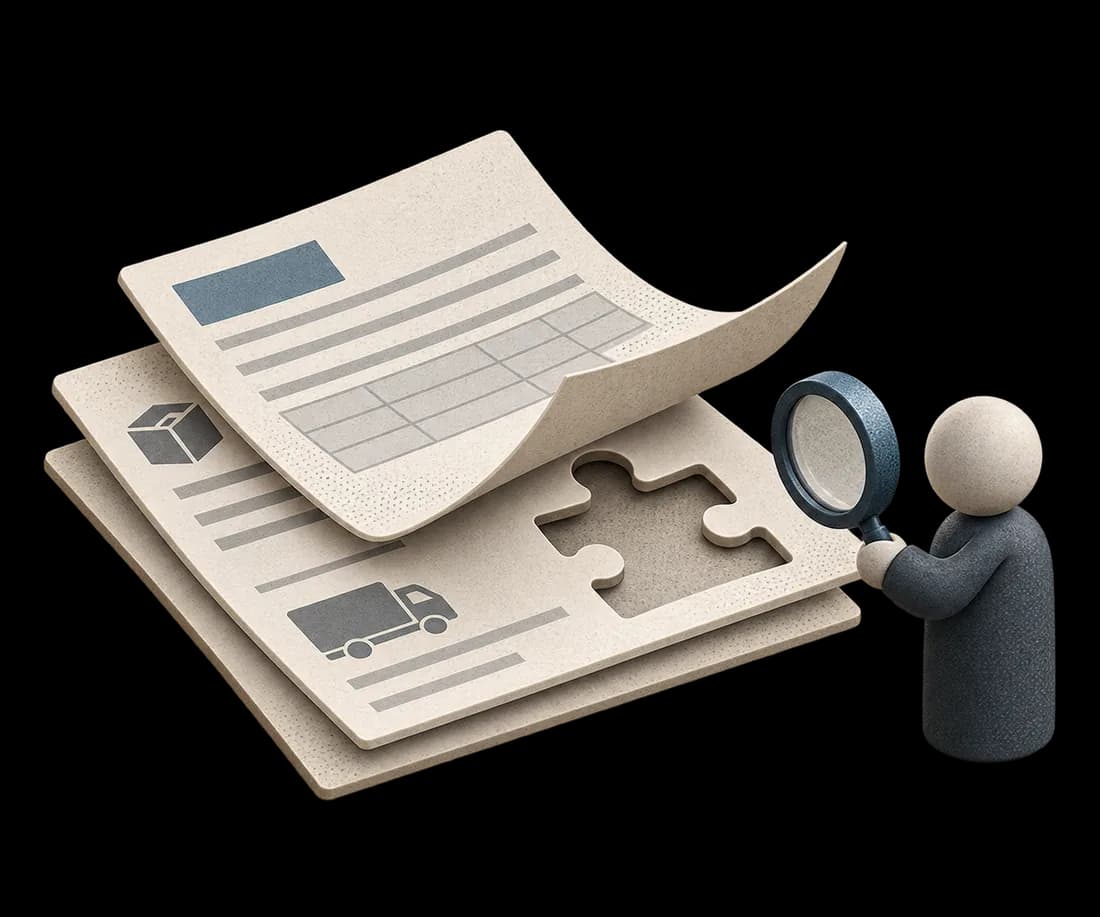

A folder has the shipment number. It contains several PDFs and yesterday's revised packing list. A button that attaches every file can make email faster while delivering an outdated or unintended document to the customer.
In a December 2025 r/logistics discussion, a poster describes repetitive customer document emails and manual ETA and ETD tracker updates. This public report motivates the handoff question. It is not a Kaliits customer case or a measured automation result.
Build a document register before a send button
For each shipment, record document type, version, source, review status and approved recipient group. Keep superseded files for history, but exclude them from the default outgoing pack.
Define who may approve each type. A document can be present without being approved for external sharing. An internal rate sheet, commercial note or another customer's attachment must not enter an outgoing pack just because it shares a folder.
Use the shipment register to select files. Folder names help navigation; they do not prove document identity or approval.
Confirm the recipient and the purpose
Maintain the intended customer contact and the permitted recipient list in an approved record. Do not let the workflow guess recipients from the latest email thread. A copied address may belong to a different shipment or may no longer be appropriate.
Build a draft with the shipment reference, requested document types and selected approved versions. Let the operator inspect the recipient list and attachments before sending, especially when the pack contains commercial or personal information.
Keep ETA and ETD updates traceable
For each estimated departure or arrival date, preserve the source, update time and whether the value is an estimate or a confirmed event. A copied date without context can look more certain than the underlying carrier update.
When sources disagree or an update is old under the team's chosen threshold, show “confirmation required”. Do not have AI invent a newer estimate. If reliable tracking already exists in a transport system, reference that system instead of creating a competing source of truth.
A fictional handoff
Shipment S-318 has packing list version one and version two. Version two is reviewed and approved. The latest carrier estimate says arrival on Tuesday, with a timestamp from Monday morning.
The outgoing draft selects version two, names S-318 and labels Tuesday as an estimate with its source time. An operator discovers that the recipient belongs to another customer. The workflow blocks the send until the recipient record is corrected and approved.
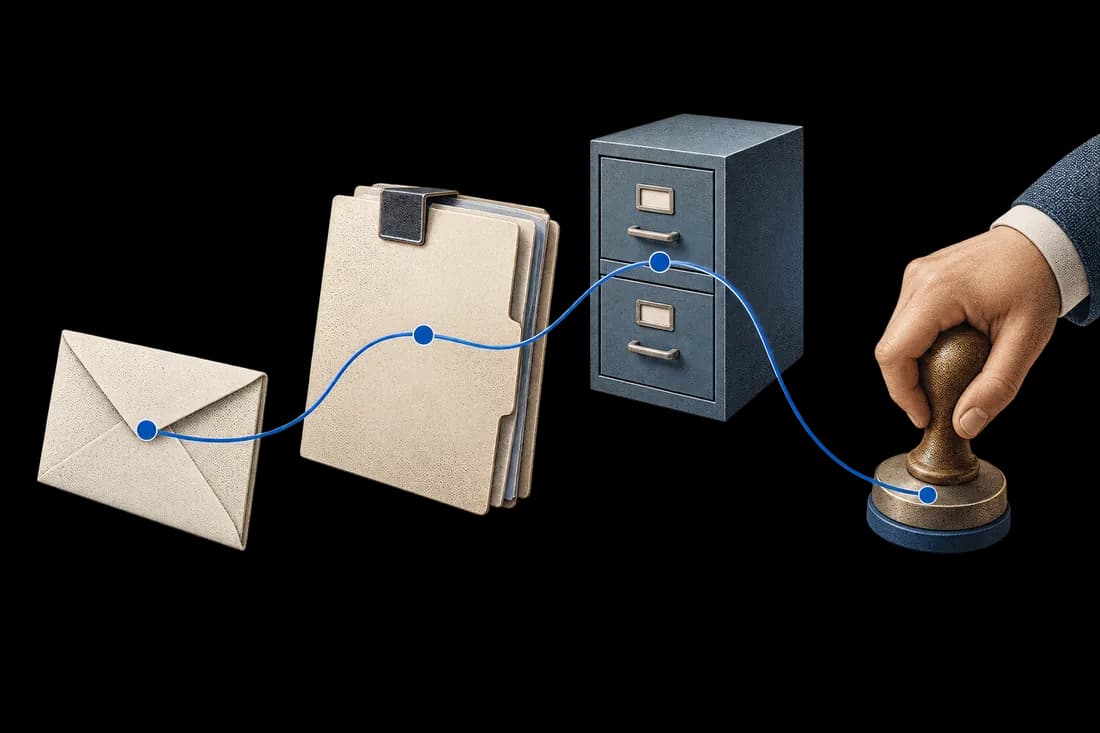
A complete folder would not have caught that error. A controlled handoff connects the document, shipment, recipient and decision.
Record sending separately from receipt
After approval, store the actual send outcome, message identifier and attachment versions. A queued request is not a successful send. If the result is uncertain, reconcile it before retrying to avoid duplicate customer emails.
A successful send does not prove the customer read or accepted the documents. Record acknowledgements only when you actually receive them. Route delivery failures and unanswered required acknowledgements to an owner.
Pilot one repeatable customer pack
Begin with one customer and a clearly defined set of documents. Existing templates, approved folder permissions and your transport system may cover much of the need. Add automation where pack preparation and exception routing remain repetitive.
Test a superseded file, a missing approval, a wrong recipient, conflicting ETA updates and an uncertain send result. Measure corrected drafts and handoffs still awaiting action, not just emails prepared. Kaliits workflow services can help scope document preparation and review while your team retains responsibility for external communication.