
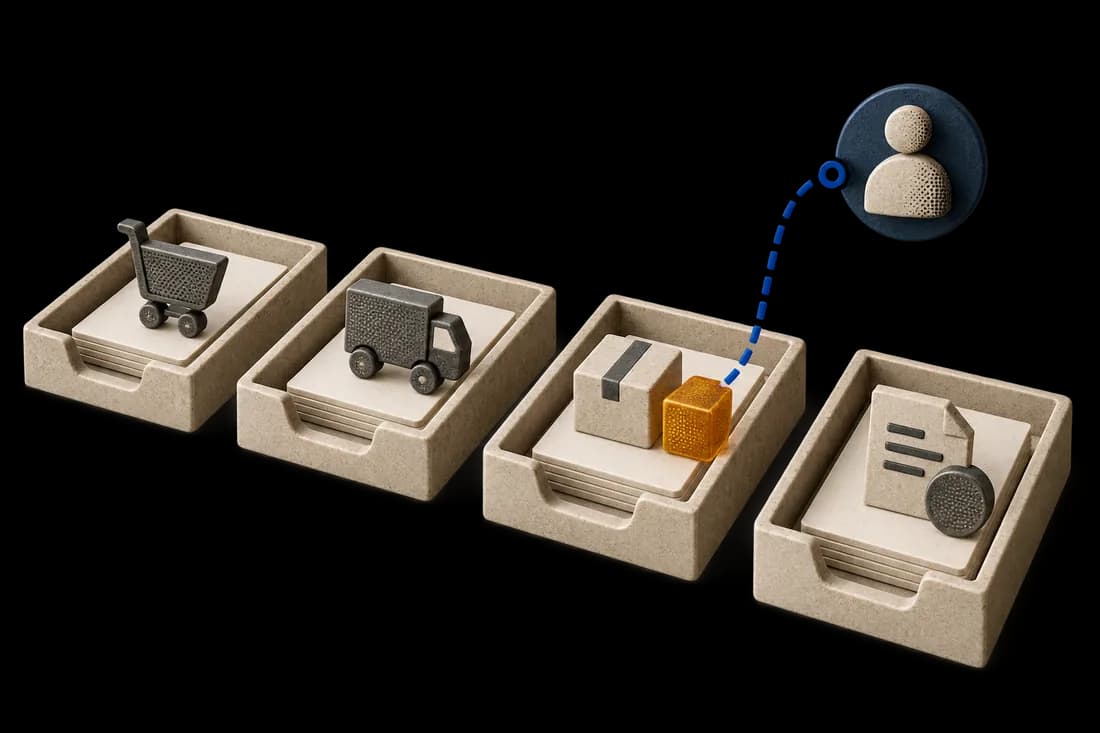
A freight invoice dispute register should track a question to a verifiable resolution. One row labelled “invoice disputed” can hide several issues: unsupported waiting time, a different rate and a charge assigned to the wrong shipment. Use one row per charge and connect those rows to the same case.
This template supports operational tracking. Confirm applicable contractual deadlines and dispute procedures with the responsible people for each transport.
Columns to copy into a spreadsheet
Use: dispute ID; carrier; invoice; shipment; charge; currency; billed amount; expected basis; variance under review; rate reference; missing evidence; owner; next action; review date; status; adjustment received; recorded adjustment reference.
Keep a second sheet for evidence: dispute ID; file; version; received date; source; relevant passage. Link to the authorized originals rather than scattering unversioned copies.
Allow “expected amount unknown.” A blank does not mean zero. This keeps a demonstrated calculation separate from a request for supporting evidence.
A worked example with fictional data
Invoice T-240 concerns shipment EXP-18 and includes waiting charges of 240 MAD before tax. The available rate sheet specifies an hourly basis, but the arrival and departure record is missing. The expected amount and contestable difference remain unconfirmed.
The register row becomes L-018; fictional carrier A; T-240; EXP-18; waiting; MAD; 240; to establish; unconfirmed; rate sheet version 2; timestamps; operations; request sourced timestamps; internal review date; evidence pending.
If the evidence later supports 160 MAD, the calculated difference becomes 80. The authorized reviewer can prepare a dispute for that charge. The 80 moves through requested, accepted and recorded adjustment states. It is not recovered money merely because it was detected.
Statuses that define the next action
Use shipment unresolved, evidence pending, calculation pending, request approved, sent, response received, adjustment pending and closed. Sending an email does not close the issue.
Assign a person and an observable action to each open status. “Finance following up” does not distinguish requesting a credit from checking that it has been recorded.
When a carrier refuses the request, retain the reason and the internal decision. A refusal requires a different next action from a missing response.
A message to adapt
“Hello, please review invoice [reference], charge [description], for shipment [reference]. Our calculation uses [rate and version] and [evidence], showing a difference of [amount and currency]. Please confirm your calculation or provide [specific evidence]. The supporting documents are [list].”
Have the message approved under your process. Retain the confirmed recipient, sent date and response in the case. Any replacement invoice or credit needs its own reference.
Measures that remain meaningful
Track open cases, age and cases without an owner or next action. Keep examined, requested, accepted and recorded amounts separate. Do not add different currencies without an explicit conversion method.
For calculation checks, use the freight invoice evidence guide. If evidence and responses remain scattered, Kaliits can assess the collection and review workflow in your logistics operations.